
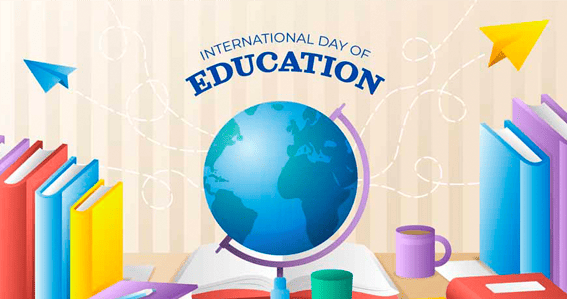
In a world where change is accelerating and challenges are mounting, education is no longer an optional extra in human life; it has become an inevitable necessity for growth and development. Knowledge and skills today represent essential tools for keeping pace with technological progress, serving as effective means to face labor market challenges and achieve personal and professional ambitions. The impact of education is not limited to the individual but extends to society as a whole by reducing poverty and unemployment, promoting health and social awareness, and building more equitable and resilient economies.
Education is considered the cornerstone of building a better future, as it enables individuals to improve their quality of life and contribute to the progress of their communities. From this perspective, the International Day of Education serves as an opportunity to reflect on the value of learning and explore ways to develop it for the benefit of all humanity.
The Concept and Dimensions of Learning
Learning is an ongoing process that is not confined to early school stages but extends throughout a person’s life. It is a semi-permanent change in behavior resulting from experience, observation, or training. It is also regarded as a complex process that involves acquiring knowledge, developing skills, and enhancing problem-solving abilities.
Educational theories have approached this concept from multiple angles; some view it as a noticeable behavioral change, while others consider it an internal mental process, and some link it to neurological changes resulting from experience. Despite the variation in these definitions, the essence of learning remains based on the interaction between the individual and their environment, which necessitates the adoption of flexible educational methods that respect individual differences among learners.
International Day of Education: Origin and Objectives
The United Nations designated January 24th as the International Day of Education to emphasize its pivotal role in achieving peace and sustainable development. This day aims to promote the right to inclusive and equitable education, improve the quality of the educational process, and highlight the challenges facing educational systems worldwide.
It also seeks to support innovation in education, particularly through the utilization of modern technology, which opens new horizons for learning and contributes to overcoming traditional obstacles such as lack of resources or difficulty accessing educational institutions.
The Importance of Education for Individuals and Society
Education is one of the most powerful tools that enable humans to realize their full potential. It does not only provide individuals with knowledge but also develops critical, creative, and innovative thinking skills, enhancing the ability to adapt to rapid changes.
Economically, education contributes to improving income levels and increasing job opportunities, as well as supporting the building of a qualified workforce capable of innovation and production. Socially, it fosters social cohesion, raises the level of awareness, and contributes to building more just and stable societies.